The Southeast United States has long been a pivotal region in America's space exploration efforts. From the historic launches at Cape Canaveral to the cutting-edge research at Marshall Space Flight Center, the region has been at the forefront of aerospace innovation for decades. Today, a new chapter is being written as startups in the spacetech and aerospace sectors are flourishing, leveraging the rich history and resources of the Southeast to push the boundaries of what's possible in space exploration and aviation.
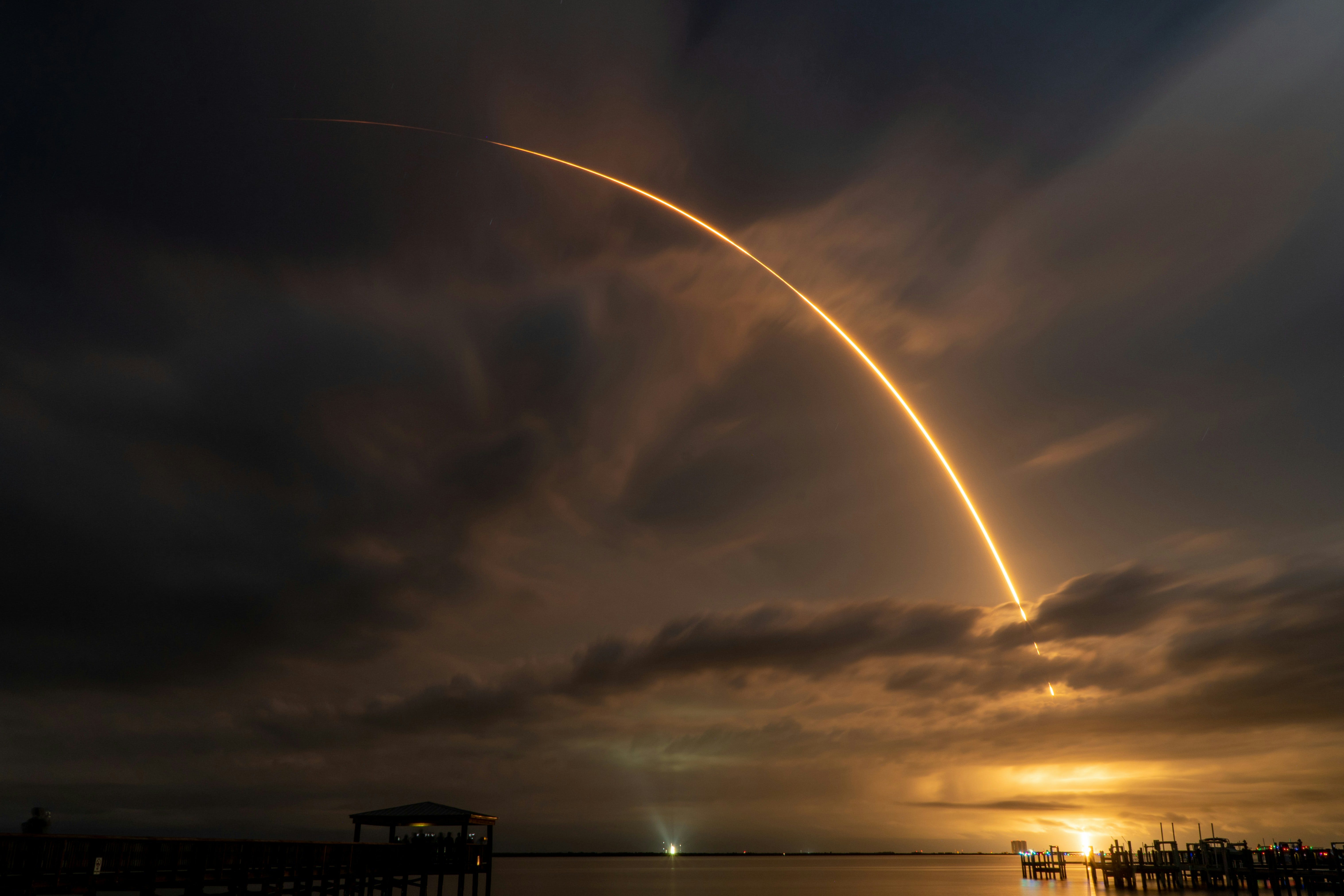
A Legacy of Space Exploration: The Southeast's Rich History
The story of space exploration in the Southeast begins with Cape Canaveral, Florida. Established in the 1950s, Cape Canaveral Air Force Station (now Cape Canaveral Space Force Station) and the adjacent Kennedy Space Center have been the launchpad for America's most iconic space missions. From the Mercury and Gemini programs to the Apollo moon landings and the Space Shuttle era, the Space Coast of Florida has been the gateway to outer space.
Further inland, the Marshall Space Flight Center in Huntsville, Alabama, has been equally crucial to America's space efforts. Established in 1960, Marshall has been NASA's lead center for rocket propulsion research and development. The center was instrumental in developing the Saturn V rocket that took astronauts to the moon and has continued to play a vital role in spacecraft design and propulsion systems for modern missions.
These institutions and others have not only advanced space exploration but have also fostered a rich ecosystem of aerospace expertise and infrastructure in the Southeast. This foundation has proven invaluable for the modern spacetech industry, providing a launchpad for innovative startups to reach for the stars.
Modern-day University and Government Initiatives
The Southeast's commitment to aerospace innovation continues today through various university and government initiatives:
University initiatives
University of Central Florida's Florida Space Institute: Located near Kennedy Space Center, this institute conducts cutting-edge space research and provides educational opportunities in space-related fields, helping to cultivate the next generation of aerospace professionals.
Georgia Institute of Technology's Space Systems Design Laboratory (SSDL): Part of the School of Aerospace Engineering, the SSDL is at the forefront of space technology research. It focuses on the design of space systems, including small satellites, space robotics, and advanced space propulsion systems. The lab has been involved in numerous NASA and industry-sponsored projects, contributing significantly to space exploration and satellite technology advancement.
University of Alabama in Huntsville (UAH): Situated in the same city as NASA's Marshall Space Flight Center, UAH has deep ties to the aerospace industry. The university's College of Engineering, particularly its Department of Mechanical and Aerospace Engineering, is known for its strong focus on space-related research. UAH's Propulsion Research Center and the Center for Space Plasma and Aeronomic Research are key contributors to advancements in propulsion technology and space weather studies.
Vanderbilt University's Aerospace Design Laboratory: Located in Nashville, Tennessee, this lab focuses on advanced aircraft design and space systems, fostering innovation in aerospace engineering. Vanderbilt also offers the Space Edge accelerator program, designed to support biomedical businesses focused on meeting the challenge of space health
Government and regional initiatives
Space Florida: This state-level organization works to strengthen Florida's position as a global leader in aerospace research, investment, exploration, and commerce. It provides support for startups and established companies alike, helping to attract investment and foster innovation in the region.
The Aerospace Alliance: This organization represents an “aviation, aerospace and space exploration corridor of excellence”, coordinating efforts across Alabama, Florida, Louisiana, and Mississippi
Virginia Space Grant Consortium: This organization, supported by NASA, brings together Virginia's space-related institutions to promote STEM education and workforce development in aerospace fields.
Mississippi Enterprise for Technology: Located at NASA's Stennis Space Center, this organization facilitates technology transfer and economic development in the aerospace sector.
Virginia Spaceport Authority Authority (Virginia Space): This state agency operates the Mid-Atlantic Regional Spaceport (MARS) on Wallops Island, providing commercial and government entities with access to space.
These initiatives, among others, are crucial in maintaining the Southeast's competitive edge in the aerospace sector and providing a nurturing environment for startups to thrive.
Leading Startups and Recent Funding
The Southeast has seen a surge in spacetech and aerospace startups in recent years. Here are some of the leading companies making waves in the industry:
Hermeus (Atlanta, GA): This startup is developing hypersonic aircraft for commercial and defense applications. In March 2022, Hermeus raised a $100 million Series B led by notable investors like Sam Altman, Founders Fund, In-Q-Tel, and others
Sidus Space (Cape Canaveral, FL): Publicly-traded Sidus provides manufacturing services, space infrastructure as-a-service, and space-based data and insights to both public and private sector customers
HawkEye 360 (Herndon, VA): This startup specializes in radio frequency (RF) data analytics, using satellite technology to provide insights for maritime, emergency response, and national security applications. They raised $145 million in a Series D funding round in 2021
Lynk Global (Falls Church, VA): Focused on providing global cellular connectivity from space, Lynk Global raised $100 million in a Series A funding round in 2022 to advance their satellite-to-phone technology, and announced in 2024 that it would go public via SPAC
Aurora Flight Sciences (Manassas, VA): Aurora specializes in autonomous systems and advanced aircraft design; the company was acquired by Boeing in 2017 and operates today as a research subsidiary
Scout Space (Reston, VA): Scout is a Techstars graduate, and offers space domain awareness solutions in the form of orbital distributed sensor networks. Scout has raised more than $5 million since its founding in 2019 from investors including Noblis Ventures and Decisive Point
Space Tango (Lexington, KY): Focused on microgravity research and manufacturing, Space Tango designs and operates automated systems for conducting experiments on the International Space Station. The company has raised VC funding, and won SBIRs and NASA awards to further its work
Aevum (Huntsville, AL): Aevum is pioneering autonomous launch vehicles for rapid space delivery. In 2021, Aevum unveiled their RAVN X drone, the world's largest Unmanned Aircraft System, designed to launch satellites into space. Aevum has won Space Force and Air Force contracts nearing or exceeding $1 billion in value for its drone work
Cosmic Shielding Corporation (Atlanta, GA): Founded in 2021, this startup is creating advanced radiation shielding materials for spacecraft and astronauts
Wagner Star Industries (St. Petersburg, FL): Wagner aims to solve the ever increasing problems of in space collisions and payload recovery via their space plane program, offering space freight cargo services
Relativity Space (Los Angeles, CA): While headquartered in California, Relativity Space has significant operations at Stennis Space Center in Mississippi and Cape Canaveral in Florida. The company is revolutionizing rocket manufacturing with 3D printing technology. In June 2021, it raised $650 million in a Series E funding round, bringing their total funding to over $1.2 billion
These funding announcements and company developments demonstrate the growing investor confidence in Southeast-based aerospace startups. The region's combination of historical expertise, supportive infrastructure, and innovative spirit is attracting both talent and capital, positioning the Southeast as a major player in the new space race.
The Future of the Industry
The spacetech and aerospace industry in the Southeast is poised for significant growth and innovation. Several trends and factors will likely shape its future:
Increased Commercialization: With NASA increasingly relying on commercial partners, we can expect a surge in startups offering specialized services such as lunar payload delivery services, on-orbit satellite servicing, space debris removal, and even space-based manufacturing of unique materials that can only be produced in microgravity environments
Advanced Manufacturing: The Southeast's strong manufacturing base, combined with innovations in 3D printing and advanced materials, is set to revolutionize spacecraft and component design. Companies like Relativity Space using giant 3D printers to manufacture components, significantly reducing production time and costs. We can expect further advancements in areas such as metal 3D printing for complex engine components, advanced composite materials for lighter and stronger spacecraft structures, and even in-space manufacturing capabilities for on-demand production of spare parts or tools
Sustainability in Space: As space debris becomes a growing concern, Southeast startups are poised to lead in developing technologies for space cleanup and sustainable satellite design. Companies might focus on developing active debris removal systems, such as nets or harpoons to capture defunct satellites. Others may work on designing satellites with built-in de-orbiting mechanisms or developing more efficient propulsion systems to extend satellite lifespans. We may also see innovations in recyclable satellite materials and modular designs that allow for easier upgrades and repairs in orbit
Defense Contracts: The strong presence of military installations in the Southeast provides ample opportunities for startups to secure valuable defense contracts. This could drive innovation in areas such as secure satellite communications, space-based early warning systems, and hypersonic technology. For instance, companies might develop advanced sensors for tracking hypersonic missiles or create resilient communication networks that can withstand potential attacks on space assets. These defense-focused innovations often have dual-use potential, leading to spin-off technologies for civilian applications
Integration with Other Tech Sectors: The Southeast's strengths in AI, cybersecurity, and advanced materials are likely to converge with aerospace, leading to groundbreaking solutions. We might see AI-powered autonomous spacecraft capable of making real-time decisions during complex missions, or advanced cybersecurity measures to protect satellites and ground stations from hacking attempts
Workforce Development: Universities in the region are positioned to significantly expand their aerospace programs to meet the growing industry demand. This might include the creation of specialized degrees in areas like space systems engineering, astrobiology, or space law. We could also see the establishment of more cooperative education programs where students alternate between study and full-time employment in the aerospace industry
The Southeast's rich history in space exploration provides a strong foundation for its burgeoning spacetech and aerospace startup ecosystem. With a combination of historical expertise, cutting-edge research institutions, government support, and entrepreneurial spirit, the region is well-positioned to play a pivotal role in the next era of space exploration and commercialization. As we look to the stars, it's clear that many of the innovations that will take us there will come from the American Southeast.