For over a century, the Southeast has been an engine of heavy industry. Long before the era of software startups, AI, and venture capital, this region was building the physical foundations of the modern economy. From manufacturing and logistics to agriculture and materials, the Southeast’s economic DNA is deeply rooted in moving, building, and growing tangible things. Historically, this deep industrial heritage didn’t seamlessly translate into the “modern” tech innovation boom. While other regions raced to build consumer apps and lightweight software, the Southeast’s legacy industries were often viewed by the broader venture world as too slow, too capital-intensive, or too deeply entrenched in old ways of working to spark a thriving startup ecosystem.
But that paradigm is rapidly changing. Today, the Southeast’s deepest moat as a regional innovation ecosystem is the lived experience of its people. Here, entrepreneurs don’t have to search for abstract problems to solve or customers whose pain points they can serve; they have a deep familiarity with the opportunity at hand.
Nowhere is this shift more evident right now than in Alabama.
When you survey Alabama’s economic bedrock and history, you find timber in the Black Belt and the Wiregrass. You find heavy manufacturing, mining, and steel in Birmingham. You find massive maritime shipping logistics in Mobile, and a sprawling, highly advanced defense and aerospace complex in Huntsville. You find agriculture that spans the entire state.
Rather than attempting to copy the Silicon Valley playbook, Alabama is building a targeted ecosystem designed to digitize, modernize, and disrupt its own historical economic engines. This isn’t just about building software; it’s about building solutions to hard problems. It’s about empowering operator-turned-founders who possess the localized, domain-specific knowledge required to sell into risk-averse legacy supply chains. And it’s about a concerted, state-backed effort to de-risk these innovations for the enterprises that need them most.
Here is an inside look at Alabama’s playbook for legacy industry innovation—and why it serves as a blueprint for the broader Southeast.
Modernizing the Map: From the Black Belt to the Rocket City
When we talk about tech hubs, the conversation usually defaults to a single metropolitan anchor. But legacy industries aren’t confined to city centers; they are dispersed across ports, forests, and farmland. Consequently, Alabama’s innovation ecosystem is intentionally decentralized. Significant startup activity is happening in places like Sylacauga, Dothan, Tuscaloosa, and Auburn, acting as vital nodes that support the larger anchors of Birmingham, Huntsville, Montgomery, and Mobile.
Rooted Innovation in Resources
The timber and forestry industry in Alabama is an economic behemoth, representing a $36 billion annual impact. But it is also an industry ripe for technological advancement—from mitigating wildfire risks and managing land utility to addressing data fragmentation across millions of acres of timberland.
To turn this economic strength into a testbed for innovation, the state recently welcomed the inaugural cohort of the gener8tor Alabama Forestry Accelerator. Based in the Wiregrass Innovation Center in Dothan, this accelerator brings together startups applying cutting-edge tech to real-world forestry challenges. By geographically placing the accelerator in the heart of the Pine Belt, founders are given immediate access to the landowners, operators, and industry leaders who will ultimately serve as their primary customer base. The inaugural cohort highlights the diversity of innovation entering the space, with solutions ranging from software app platforms (TreeTracker is streamlining fragmented management operations into a comprehensive web and mobile app platform) to fertilizer development (Chonex, a company upcycling wood and agricultural byproducts into patented biofertilizers).

Shellulose is another accelerator participant, founded by Dr. Symone Alexander, Assistant Professor in Auburn’s Department of Chemical Engineering. The startup is working to scale its innovative approach to converting agricultural waste (like pecan shells) into cellulose nanofibers that can replace traditional petroleum-derived plastics. Dr. Alexander explains the benefits of being located in Alabama:
Shellulose exists because of Alabama’s amazing support for innovative science and technology. Auburn’s IPX office connected me with accelerators across the state and have supported my development of new technology from the beginning. The Alabama Biomanufacturing Labs Program from Arrowpoint Labs gave me much needed funding to hit technical benchmarks and actually start a company. I wouldn’t have taken the leap into entrepreneurship without their support and guidance. Participating in the Alabama Forestry Accelerator from gener8tor helped me think like a business owner and better understand how to scale my business and reach investors. Last but not least, at HudsonAlpha, one spontaneous lunch meeting with Barb Malchow has opened doors to an amazing network of founders and investors in Dothan and across Alabama. With all of their support, I know Shellulose can succeed and achieve my vision of safer manufacturing of food, cosmetics, and pharmaceutical products while also reducing waste in the environment.
In Huntsville, a city internationally renowned for its aerospace and defense capabilities, a different kind of legacy disruption is taking place. The HudsonAlpha AgTech Accelerator (also powered by gener8tor) is investing $100,000 into high-growth startups working at the forefront of agriculture innovation. By leveraging HudsonAlpha’s deep expertise in agriscience, genomics, and plant breeding, alongside Huntsville’s deep talent pool of engineers, the accelerator has attracted startups that are solving critical infrastructure problems. Recent cohorts have featured companies like SouthGen Solutions, which utilizes unmanned aircraft systems for precision agriculture; Agriwater, a company pioneering on-site wastewater treatment technologies for livestock farmers; and Druid, a startup uniquely bridging the gap between these agricultural and forestry hubs.
In Tuscaloosa, Techstars launched their WaterTech & Sustainability Accelerator in 2024 in partnership with the Tuscaloosa County Economic Development Authority and the University of Alabama; the hybrid program targets startups addressing everything from drinking water systems and utility management to hydrologic prediction. Gener8tor and the University of Alabama also recently announced gBETA Innovate UA, a new startup accelerator designed to transform university research into scalable companies with the support of the National Science Foundation.
Further broadening the natural resources and sustainability thesis, Birmingham is scaling innovation in power and clean technology through the Techstars Alabama EnergyTech Accelerator. Powered by Alabama Power, this 13-week program focuses on startups developing solutions in climate tech, clean energy, and smart grid efficiency. By placing founders in close proximity to one of America’s largest energy producers, the accelerator gives startups a crucial testing ground to modernize utility infrastructure and accelerate the transition toward renewable energy sources—a pipeline validated by last year’s acquisition of program alumnus Resilient Power Systems by global power management company Eaton.
Condoit is a Birmingham, Alabama-based technology startup that provides a cloud-based software platform and mobile app for the electrical industry, founded in 2020 by former commercial electrician Ian Hoppe. Ian’s deep background and expertise seeded the idea for his company, but it was the deeply committed organizations and individuals in the surrounding community that made scaling a possibility. As Ian notes:
I grew up around the trades here in the Southeast. My dad is an electrical engineer here in Birmingham, and I learned everything I know from him. When I started Condoit, I wasn’t learning an industry from the outside. I was just building a solution for people I’d known my whole life. For myself. The first version of Condoit was for myself. That kind of proximity to the problem isn’t something you can manufacture, and I think it’s made all the difference in how we approach the work.
Condoit would not exist were it not for Nate Schmidt, Brooke Gillis, Innovation Depot, Techstars Alabama Energytech Accelerator, and Alabama Power. These people and organizations pushed and pulled me when I needed it and supported me and the team through the tough times that come with being a startup. They made vital connections, wrote investment checks, talked to lawyers, gave me pep talks, etc. I don’t know where I would be without them. This ecosystem has done so much for me and I only hope to give back some fraction of that.
Advanced Manufacturing and Defense
While the agricultural and forestry sectors are digitizing the physical earth, Alabama’s hardware, defense, and manufacturing ecosystems are modernizing the industrial floor and securing the nation.
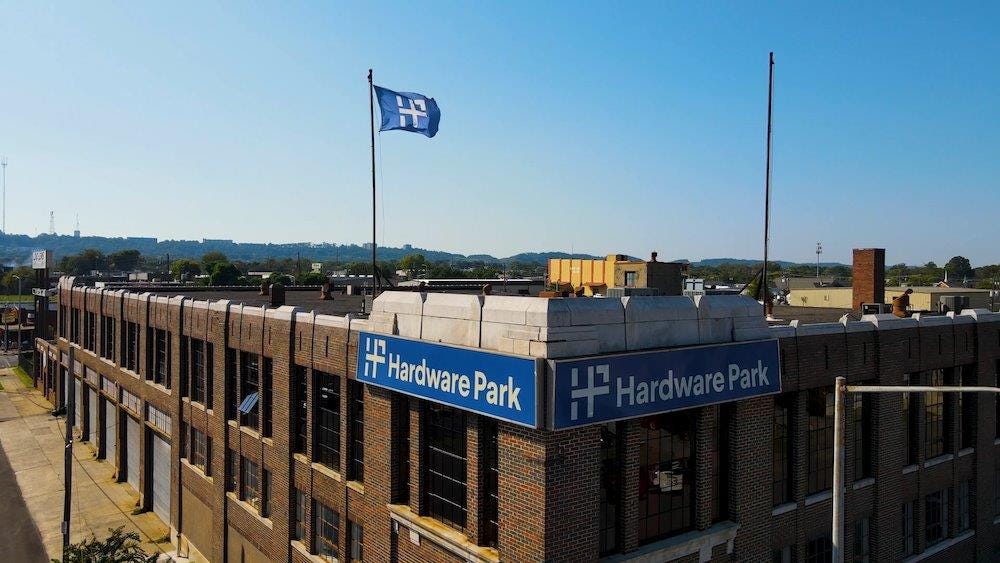
In Birmingham, facilities like Hardware Park are driving physical and medical technology innovation, giving founders the physical infrastructure needed to prototype, iterate, and manufacture without having to outsource to the coasts or overseas. Startups scaling adjacent to new-age industrialization, advanced manufacturing, and supply chain logistics are finding a supportive base not just in Birmingham, but through initiatives spanning the Gulf Coast. Mobile is home to one of the nation’s largest ports and massive shipbuilding operations like Austal USA, and startups are working to modernize the maritime and logistics sectors there. The gBETA Gulf Coast accelerator, hosted at Mobile’s Innovation Portal, actively supports startups adjacent to Industry 4.0, advanced manufacturing, and maritime operations. Recent cohorts have featured innovative “blue tech” startups like EquipSense, which automates heavy equipment tracking and runtime monitoring to reduce operational downtime. Furthermore, resources like the AIDT Maritime Training Center are evolving to ensure the local workforce is equipped with the advanced automation and robotics skills needed to power these next-generation maritime technologies.
Meanwhile, Huntsville is aggressively scaling its aerospace and defense legacy. As the home to U.S. Space Command and massive operations for major primes like Boeing, Lockheed Martin, and Northrop Grumman, the city offers a built-in customer base for dual-use founders. In partnership with the Huntsville/Madison County Chamber, Treble One, and Innovate Alabama, the Cummings Research Park (CRP) DefenseTech Accelerator provides a 12-week intensive program for early-stage companies with scalable technologies. Hosted at the University of Alabama in Huntsville’s Invention to Innovation Center (I²C), the accelerator connects startups directly with Department of Defense stakeholders, prime contractors, and strategic advisors. By bridging the gap between innovative startups and the federal government’s complex procurement process, the program actively grows the region’s defense industrial base while helping founders land crucial defense contracts and navigate traditional acquisition pathways.
For hardware and defense founders, navigating the complexity of procurement cycles and buyer relationships can be highly challenging, but that’s where these programs offered by public and private entities across the state can be so valuable. Huntsville-based Skyfire AI, a 2025 graduate of the CRP DefenseTech Accelerator and a provider of software and AI platforms for drone systems, recently raised $11M in a seed fund from a range of investors including Mucker Capital, AI Fund, SaaS Ventures, and Halogen.
Matt Sloane, Co-Founder and Chief Strategy of the company, put it clearly:
In many respects, Alabama is the center of the universe for aerospace innovation, and what’s been particularly helpful for us as a small company is the state’s focus on supporting innovation in that sector. From defense-focused accelerators, access to investors that are interested in this space and networking opportunities with federal and defense end users; combined with a business-friendly state in general - Alabama has been an incredibly welcoming environment for us.
The Public-Private Approach for Legacy Industries in Alabama
Despite the startup energy in cities across the state, disrupting legacy industries is not without friction. Building software for consumers is fast; building hardware, deep-tech, or enterprise SaaS for heavy industry is notoriously slow. Legacy corporations are inherently risk-averse. A bug in a social media app is an inconvenience; a bug in a piece of logistics software on a manufacturing floor can halt a multi-million-dollar production line.
To bridge this gap, organizations across the state of Alabama are developing a more structural approach to ecosystem building. The state government, acting in concert with private capital and economic development organizations, is actively stepping in to de-risk adoption for legacy corporations while extending the runway for hard-tech founders.
The “Alabama Puts Founders First” Strategy: Corporate Pilots and EDPA
In late 2025, the Economic Development Partnership of Alabama (EDPA), in coordination with the Alabama Department of Commerce and Innovate Alabama, launched a massive statewide technology attraction strategy. Organized under the banner “Alabama Puts Founders First,” the initiative signaled a mature shift in how the state supports its ecosystem.
Rather than just focusing on top-of-funnel startup creation, the EDPA recognized that the hardest leap for a B2B startup is landing that crucial first enterprise customer. To solve this, the EDPA introduced a corporate pilots program called PilotAL as a core pillar of its new strategy. This initiative actively funds real-world pilot projects between growth-stage startups and established Alabama corporations—specifically targeting legacy sectors like metals, automotive, forestry, and defense.
“This strategy makes it clear that our state is ready to help startups thrive with tailored resources, accessible capital, and a community that welcomes big ideas,” noted Jackson Pruett, EDPA’s Director of Technology Company Business Attraction, upon the launch of the program.
By subsidizing the cost of the pilot, the state completely changes the incentive structure. Legacy corporations get to test cutting-edge technology (like AI-driven predictive maintenance or supply chain logistics software) without absorbing the total financial risk of a failed integration. Simultaneously, the startup gets to prove its value in a live market setting, secure a massive enterprise logo for its pitch deck, and generate revenue.
Phillip Hansel, Co-Founder and CEO of Ai-OPs, spoke about the criticality of support from organizations like EDPA and others, and how those organizations and startups are changing the fabric of the state’s tech ecosystem:
Building a technology company in the Southeast comes with challenges, particularly when it comes to access to early-stage capital and the networks that have traditionally been concentrated in larger financial and technology hubs. We still have work to do as a region to compete with established venture ecosystems and to broaden the perception of who can build and invest in high-growth technology companies.
At the same time, we’ve experienced firsthand the power of a growing support network that is committed to changing that reality. Organizations and partners such as TriNova, Alabama Power Company, C2V Ventures, Techstars, the EDPA, and Innovation Portal have provided capital, guidance, introductions, opportunities, and belief when it mattered most. Rather than simply supporting individual companies, these organizations are helping build the foundation for the next generation of entrepreneurs across Alabama and the Southeast.
What excites me most is that we’re not just building companies; we’re building the ecosystem itself. Every founder, investor, corporate partner, and community leader who contributes to that effort strengthens the region’s ability to create, attract, and scale innovative businesses. That may ultimately become Alabama’s greatest competitive advantage.
State-Supported Innovation at Innovate Alabama
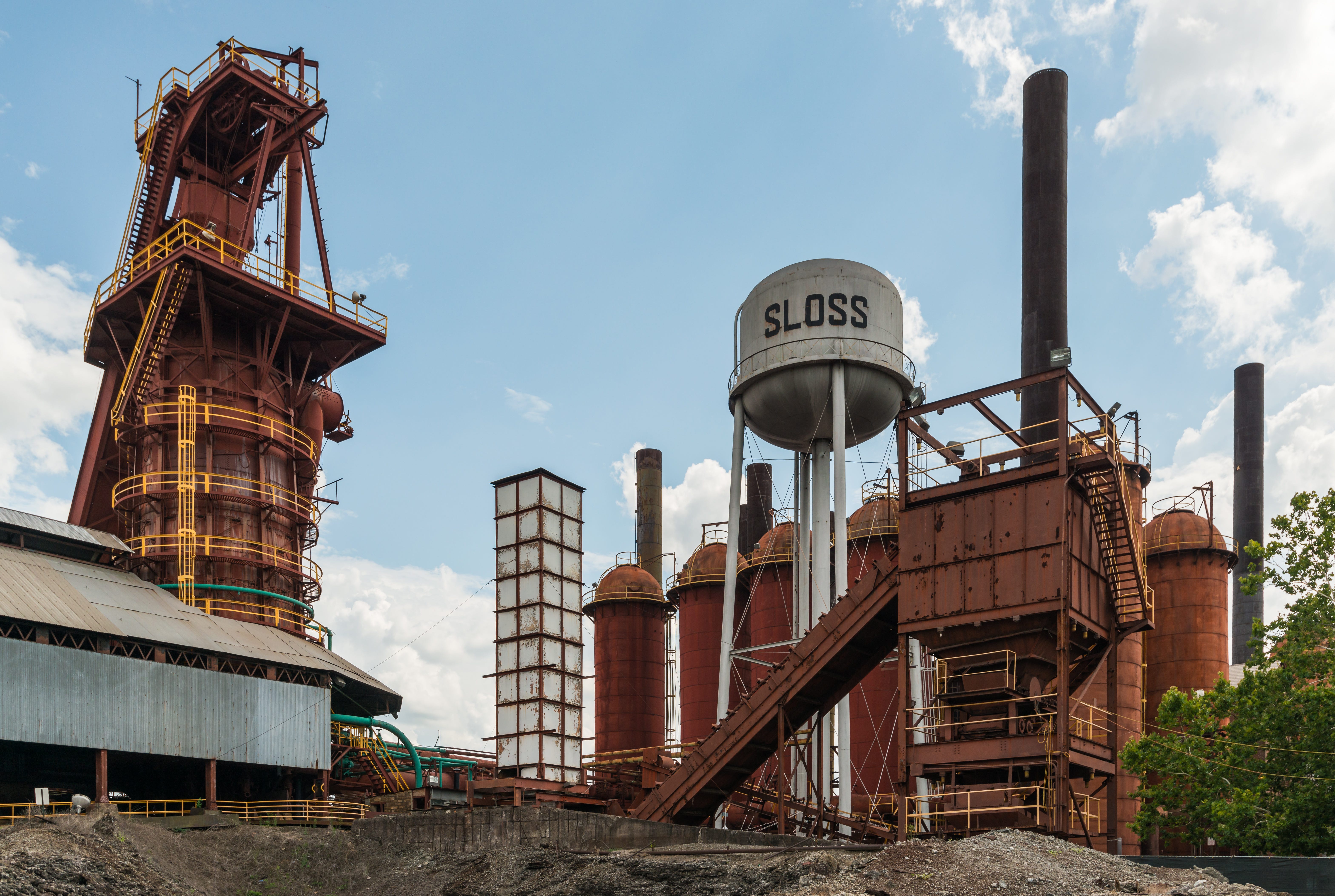
Working hand-in-hand with the EDPA is Innovate Alabama, a statewide public-private partnership that has become the financial engine for the state’s legacy industry transformation. Their strategy relies on deploying massive, highly targeted capital to incentivize both founders and private investors.
One of their most impactful levers is the SBIR/STTR Supplemental Grant Program. Hard-tech and research-intensive startups often rely on federal Small Business Innovation Research (SBIR) grants to survive the long development cycles inherent in their fields. Innovate Alabama provides non-dilutive matching funds (up to $250,000 for Phase II winners) to Alabama companies that secure these federal grants. Recently, the program awarded $3.3 million to 20 Alabama companies. A look at the recipients proves the state’s legacy thesis: the list includes companies like Accelerate Wind (roof-edge wind turbines), Cosmic Shielding Corporation (radiation shielding for space systems), and Spearstone Solutions (transforming industrial waste like coal ash into valuable products). Since its inception, the supplemental program has injected over $17 million in non-dilutive capital into the ecosystem, ensuring that companies solving incredibly hard, physical problems have the runway to reach commercialization.
Innovate Alabama is also using tax credits to generate private-sector funding for qualifying Economic Development Organizations (EDOs). This has allowed regional banks and corporate players, such as First Horizon, to channel resources directly into accelerators like gener8tor in Huntsville, building the programmatic infrastructure necessary to support these founders. Furthermore, Innovate Alabama is actively recruiting out-of-state capital through its InvestAL program, backed by the State Small Business Credit Initiative (SSBCI). Through InvestAL, the state recently partnered with Los Angeles-based Halogen Ventures, a venture capital firm focused on early-stage, female-founded startups. Led by Jesse Draper, the fund brings immense national pedigree, having invested in over 75 startups with a collective market value exceeding $15 billion. This strategic partnership led Halogen to launch a $10 million initiative dedicated to backing women-led companies in Alabama, effectively bridging the local capital gap and bringing national venture networks directly to the state’s most underserved founders.
Recognizing that many legacy corporations are sitting on a goldmine of real-world problems but lack the internal framework to build solutions, the state has also embraced the venture studio model. Innovate Alabama has partnered with Harmony Venture Labs (HVL) - a Birmingham-based venture studio led by Shegun Otulana, who previously built and exited one of the Southeast’s largest software companies - to build a venture studio and fund. HVL operates as an early-stage experimentation engine. They partner with forward-looking corporations to identify high-potential problems in underserved industries, run structured sprints, and build AI-native, capital-efficient startups to solve them. This model essentially spins out high-growth startups that are rooted in corporate reality from day one. It’s a perfect encapsulation of Alabama’s broader strategy: don’t guess what the market wants, but rather partner with the legacy operators who hold the budgets and build the exact tools they are asking for.
A Collaborative Network of Capital and Support
Crucially, this public-sector momentum is being met by a maturing private capital network and world-class physical infrastructure. Organizations like First Avenue Ventures, a Birmingham-based investment firm and private incubator, provide capital alongside hands-on operational support to help founders navigate the specific dynamics of scaling in these markets. They are joined by firms like the Alabama Futures Fund, which strategically deploys seed capital to early-stage, high-growth startups, and Bronze Valley, a non-profit venture capital firm and CDFI dedicated to empowering under-resourced and underrepresented founders.
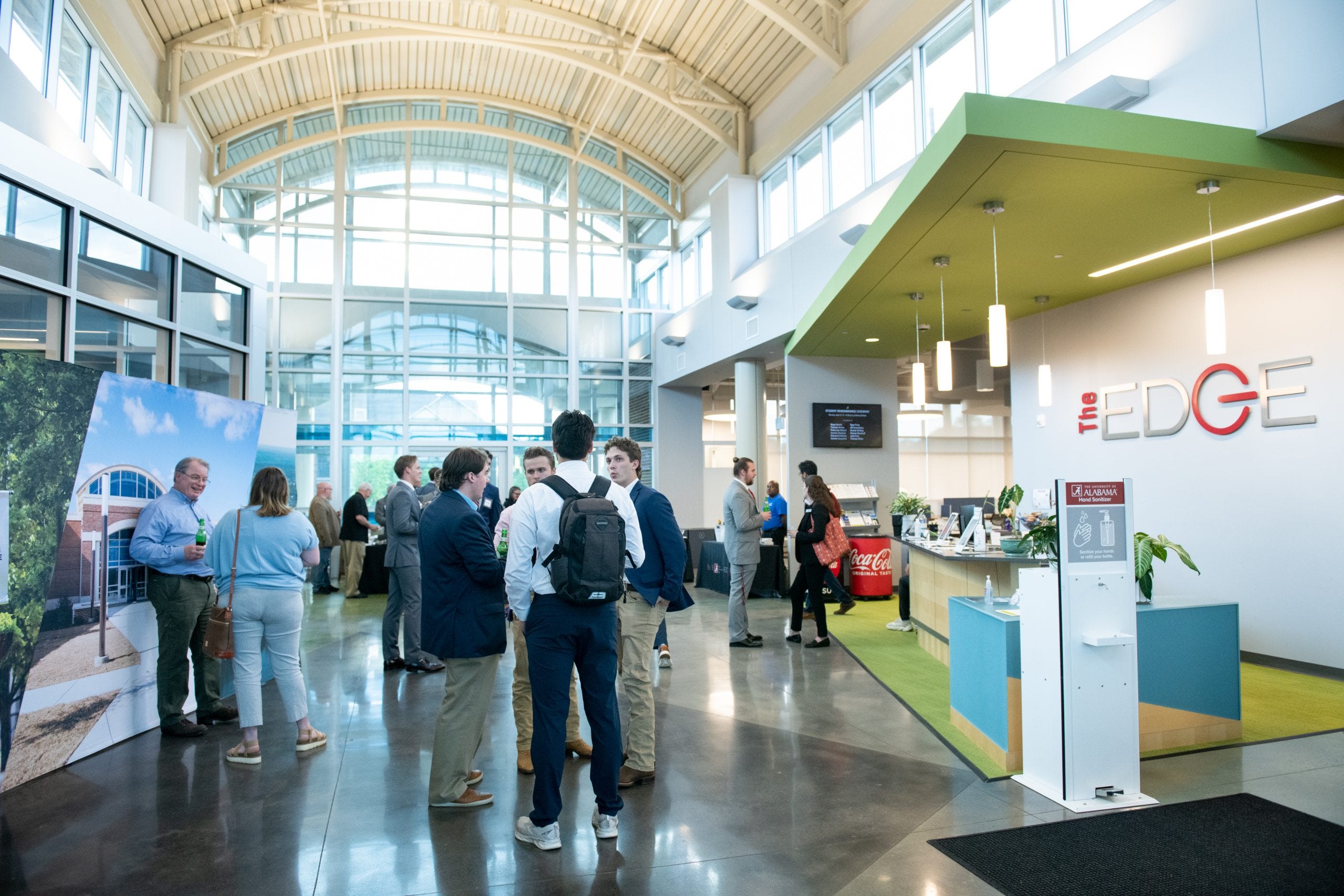
This capital is deployed across a statewide network of innovation centers that give founders the physical space to build. In Birmingham, Innovation Depot serves as the epicenter for early-stage technology companies, offering lab and coworking space. In Tuscaloosa, The Edge - a collaborative incubator powered by the University of Alabama, the City of Tuscaloosa, and the local Chamber of Commerce - provides a critical hub for founders driving localized innovation. Across the state, Auburn University and the city recently announced a $22M research facility and specialized advanced manufacturing district in Auburn Research Park. The 100,000 square-foot facility will house the Auburn University Radio Frequency Identification (RFID) Lab, which has focused on advancing and implementing RFID and other emerging supply chain technologies in industry settings including retail, aviation, aerospace, and manufacturing. Further north, the HudsonAlpha Institute for Biotechnology in Huntsville not only powers AgTech initiatives but offers unparalleled lab infrastructure and an expansive research campus for bioscience and deep-tech founders.
On the venture creation side, groups like Arrowpoint Labs are building targeted infrastructure and running place-based economic development models to launch deep-tech and biomanufacturing startups. Meanwhile, the Alabama Capital Network continues to connect high-net-worth individuals and corporate investors with scaling startups, ensuring that once these founders prove their models through state pilots, local capital is waiting to fuel their expansion.
Where Do We Go Next?
In the highly competitive world of venture capital and startup ecosystem building, regional differentiation is everything. Trying to out-Silicon-Valley Silicon Valley is a losing proposition.
Alabama has recognized that its competitive advantage exists not necessarily in the cloud, but in the dirt, the forests, the factories, and the ports. The combination of historical industry density, operator-turned-founders who intimately understand legacy pain points, and a coordinated approach to supporting startups addressing these problems makes Alabama uniquely effective in the B2B and hard-tech space.
Alabama’s playbook can also serve as a blueprint for the broader Southeast. The same structural thesis can be applied across the region. If Alabama can use state-backed corporate pilots and unique funding and building mechanisms to digitize forestry and manufacturing, other states can be creative in modernizing their own legacy sectors. When regional governments align with private capital to de-risk the adoption of technology for their oldest, largest industries, everybody wins. Corporations gain efficiency, local startups gain enterprise customers, and the region retains its top talent.
The Southeast is not just a collection of isolated tech hubs; it is an interconnected economic engine. And as we see in Alabama, a rising tide can raise all boats.