


The financial technology boom isn’t confined to Silicon Valley or Wall Street – it’s thriving across the American Southeast. In recent years, states from Virginia to Florida and everywhere in between have fostered a nationally significant fintech ecosystem fueled by collaboration, execution, and a shared mission. Entrepreneurs and investors in this region often echo the mantra that “a rising tide lifts all boats,” reflecting a community ethos of cross-state partnerships and collective growth. The result is a diverse but interconnected fintech landscape, where Atlanta’s payments powerhouses, Charlotte’s banking innovators, Florida’s emerging crypto and finance players and founders from other parts of the region all contribute to the rising tide. Once known primarily for traditional banking and back-office operations, the Southeast today boasts a vibrant fintech ecosystem.
Build In SE is dedicated to spotlighting and supporting startup success stories in the Southeast, and wanted to help tell the story of the region’s financial services surge. This article explores the region’s journey from its historic financial services roots to its current status as a fintech hub, highlighting key subsectors, success stories across multiple states, major players (companies, investors, accelerators), and emerging trends of collaboration and innovation. We’ll also examine what’s happening now in this dynamic landscape and what comes next for fintech in the Southeastern United States.
Historical Roots: Banking Capitals and Fintech Foundations
To understand how the Southeast became a fintech force, it helps to look back at the region’s deep-rooted financial services infrastructure — and how cities like Charlotte, Atlanta, and others evolved from legacy banking hubs into fintech launchpads.
Charlotte’s Banking Legacy: Charlotte, North Carolina has been a hub for banking for decades. After a wave of 1980s and 2000s bank mergers, the city became home to giants like Bank of America, Truist (via BB&T/SunTrust), and a significant portion of Wells Fargo – making it the nation’s second-largest banking center by assets. This “Banktown” reputation laid groundwork for fintech growth. Major banks seeded skilled financial talent and needs for new tech solutions. Decades later, Charlotte’s large finance sector is now fueling fintech innovation; as SnapRefund founder Cody Eddings noted, “Charlotte is a big banking city. A lot of financial services run through Charlotte”. The city’s concentration of banks has naturally attracted fintech startups aiming to serve them, and it now actively brands itself as a fintech and insurtech hub.
Atlanta’s Payment Revolution: The Southeast’s fintech rise is deeply intertwined with its banking history. At one point, Atlanta was the leading bank hub in the region before being surpassed by Charlotte. However, Georgia’s deep expertise in check processing and payment operations became the seed of a new industry. “We had a superior knowledge of [the check processing] process and could envision what it could look like in a digital world,” recalls Larry Williams of the Technology Association of Georgia. As core banking headquarters moved out, Atlanta’s remaining financial operations talent pivoted to building technology services for banks – credit card processing, online banking, bill pay, risk and credit data, and more. This shift in the late 1990s and early 2000s gave birth to a payments processing ecosystem that would earn Atlanta its “Transaction Alley” moniker. Over time, homegrown firms like CheckFree, First Data, Global Payments, Elavon, Fiserv, and Corpay (FleetCor) flourished in Georgia. By the early 2000s, Atlanta had effectively transformed from a regional banking center into a global fintech hub, focused especially on digital payments.


Beyond Atlanta and Charlotte: Other Southeastern states also have deep financial services roots that set the stage for fintech. Florida, for instance, has long hosted major financial technology firms – Jacksonville is headquarters to FIS, one of the world’s largest payment processors and core banking software providers, and was also home to Black Knight (mortgage tech) before its acquisition. Nashville, historically known for healthcare and music, also has financial ties (regional banks and investment firms) and has recently seen fintech growth in areas like payment processing and lending platforms. Alabama is home to Regions Bank and community banks; Virginia hosts a range of leading financial services firms like Capital One and capital allocators like QED Investors, and is home to the highest density of data centers in the world. These communities have financial infrastructure and talent bases that fintech startups can leverage. In short, the Southeast’s strong base of banks, payment networks, and financial back-office operations provided fertile ground for fintech.
Fintech Ecosystem and Success Stories Across the Southeast
The fintech sector is burgeoning across the region, but certain hubs are punching above their weight. Below, we highlight success stories from Georgia, North Carolina, and Florida.
Atlanta
Atlanta stands out as a fintech powerhouse often dubbed “Transaction Alley” – roughly 70% of all U.S. debit, credit, and digital payments flow through companies in the Atlanta area. This payments legacy is anchored by major firms like Global Payments, Fleetcor’s Corpay, and rising stars such as Greenlight. Global payments processors and fintech giants have deep roots here – six of the 10 largest U.S. payment processing companies are headquartered in Georgia according to the AJC, and decades of M&A activity (for example, the $22+ billion merger of Global Payments and TSYS) and a steady churn of startups fuel the ecosystem. According to the Technology Association of Georgia, the state now hosts 260+ fintech companies, supporting ~42,500 jobs, and the top 12 Georgia-based public fintech firms generate roughly $49 billion in annual revenue. Homegrown fintech successes like Kabbage (founded in 2008 and later acquired by American Express) Greenlight (an Atlanta-founded family banking app serving over 6 million users) spotlight how the region nurtures both B2B and consumer fintech innovation, while locally-grown crypto leader Bakkt shows the city’s embrace of new-age technology. Atlanta’s collaborative culture is evident in conferences like Fintech South) and organizations like Fintech Atlanta and the Technology Association of Georgia, which connect entrepreneurs with the city’s rich financial talent pool. The result is a virtuous cycle: established payment firms attract talent and capital, which in turn spin off new ventures and ideas – all reinforcing Atlanta’s reputation as a global fintech hub.
Charlotte
As one of the nation’s top banking centers, Charlotte has leveraged its finance pedigree into fintech innovation. The city is home to Bank of America and Truist and a significant Wells Fargo presence, and it ranks as the second-largest banking hub in the U.S. – providing fertile ground for fintech startups. Local successes LendingTree (online lending marketplace) and AvidXchange (accounts-payable automation) prove that homegrown firms can make it big. LendingTree’s founder, Doug Lebda, kickstarted his online loan business in Charlotte in the 1990s; today the company is publicly traded and still a pillar of the community. AvidXchange likewise grew from a small startup to a multibillion-dollar fintech, recently even attracting a $2.2B private equity buyout offer (a testament to its maturation). Beyond these marquee names, a constellation of newer startups emerged – from Payzer (contractor payments) to Honeyfi (family finance) – often led by banking veterans reimagining financial services, and leading toward further ecosystem building. Charlotte’s strength lies in its supportive network: organizations like Carolina Fintech Hub and accelerator RevTech Labs cultivate local talent and connect founders with industry resources. This communal approach, combined with the city’s deep pool of financial experts, has created a warm, collaborative fintech community. It’s common to see big-bank professionals mentoring startups or local universities partnering on fintech initiatives. In Charlotte, traditional banking and fintech startups aren’t at odds – they’re working together to cement the region’s status as a fintech leader in the Southeast.
Raleigh-Durham (The Research Triangle)
In North Carolina’s Research Triangle (Raleigh, Durham, and Chapel Hill), fintech is flourishing at the intersection of academic R&D and entrepreneurial zeal. This region’s world-class universities – Duke, UNC, NC State – provide a steady pipeline of tech talent and research breakthroughs. Many graduates choose to stay local (about 64% have remained in the area since 2010, according to Lithios and ABC), feeding the growth of the Triangle’s startup scene. Fintech ventures here often spring from campus labs or hackathons and quickly gain traction. For example, Raleigh-based Finmark developed a startup financial planning platform so compelling that it was acquired by BILL (formerly Bill.com) within just a couple of years. Similarly, Durham’s LoanWell offers cloud lending software to help community banks modernize their loan process, an idea that earned it a spot in Google’s Startup Accelerator for Black Founders. These successes underscore the region’s knack for identifying niche problems and solving them with fintech solutions – whether it’s startup budgeting or small-bank lending. Thanks to strong support organizations (NC IDEA, American Underground, and others), founders can tap into grants, coworking spaces, and mentorship right at their doorstep. The Research Triangle’s warm collaborative vibe means a company like Spreedly (Durham-based payments API platform) can raise $75M and scale globally while still engaging with local meetups, and a small startup can find its first investors via a university connection. The result is a tightly knit fintech hub fueled by academic insight, homegrown tech skills, and a spirit of cross-state connectivity – Triangle innovators frequently swap notes with peers in Charlotte and Atlanta, stitching the Southeast’s fintech fabric even closer.


Florida (Miami, Tampa, Orlando and Beyond)
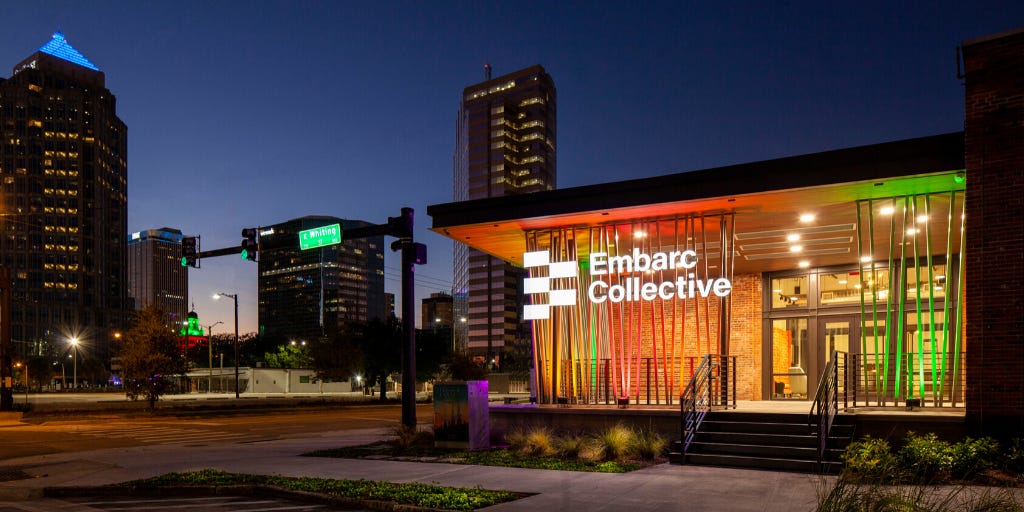
Florida’s fintech landscape is as diverse as its geography – from Miami’s crypto-forward bustle to the steady enterprise fintech of Jacksonville. Miami, in particular, has made waves by blending fintech with crypto hype. Branding itself as the “Wall Street of the South,” Miami has courted blockchain and Web3 startups aggressively. The city’s mayor famously embraced Bitcoin as a salary and launched initiatives to attract crypto exchanges and NFT platforms. Major crypto conferences now make the city a yearly pilgrimage, and startups like MoonPay (a crypto payments unicorn) and Blockchain.com (which moved its U.S. HQ to Miami) underscore the fintech–crypto crossover happening here. This energy, combined with Miami’s role as a bridge to Latin America’s fintech market, has created a hotbed of new finance ideas. At the same time, other Florida cities are thriving on more traditional fintech strengths. In Jacksonville, legacy players like FIS (a Fortune 500 financial software firm) and Black Knight (mortgage tech, acquired in 2023 for $11B+) provide thousands of fintech jobs and often partner with smaller startups. Tampa and Orlando have nurtured their own fintech champions: Orlando’s Stax (formerly Fattmerchant) grew into a payments unicorn, attracting growth investment for its all-in-one payments platform. Tampa, with support from incubators like Embarc Collective and Tampa Bay Wave, has produced companies like Fintech (the beer and wine industry payment processor) and seen Silicon Valley transplants relocate here for the business-friendly climate. The state’s fintech success stories are frequently interlinked across regions: a Miami crypto startup might raise money from investors in Tampa; an Orlando payments firm expands sales into Latin America via Miami’s networks. This cross-pollination creates a narrative of a state unified in fintech growth, and investment in Florida startups has been growing at a double-digit pace.
Fintech Subsector Spotlights
The Southeast’s fintech boom spans a spectrum of subsectors. Below, we spotlight key domains – from digital banking to wealthtech– and highlight how different states in the region contribute to each niche.
Digital Banking & Payments
Digital banking and payments startups are emerging even in states without large financial centers, often addressing the needs of underserved communities. In Alabama, Birmingham’s banking heritage is giving rise to payments innovation. One standout is Prepaid2Cash, a startup that relocated from Silicon Valley to Birmingham’s Innovation Depot after an investment by the Alabama Futures Fund (the AFF has lured multiple fintech startups to the state, often in partnership with investors from neighboring states like Tennessee and Louisiana). Prepaid2Cash turns unused prepaid cards and gift cards into cash in your bank account, and its move exemplifies Alabama’s strategy of attracting fintech talent through regional collaboration. Prepaid2Cash quickly scaled in Birmingham – processing over $25 million in transactions in a year. Meanwhile, South Carolina is making its mark in payments through Charleston’s growing tech scene. Charleston-based startup SnapCap launched an online small-business lending platform that gained such traction it was acquired by Charlotte’s LendingTree for $21 million. That cross-state acquisition not only gave SnapCap’s founders a successful exit, but also tied South Carolina into the region’s fintech web. Across the region, the thread is clear: digital banking and payments innovation often starts at the grassroots, with founders solving local problems, and grows through regional support.
Lending & Financing
Lending and financing tech has seen robust activity in states like Tennessee and Kentucky, where fintech entrepreneurs often focus on specific industry verticals or regional banking needs. Tennessee, anchored by the Nashville metro, has risen as a hub for lending innovation – especially tied to the city’s strengths in real estate and healthcare. Nashville’s own Built Technologies is a prime example: founded in 2014, Built created a platform to streamline construction loans, a traditionally cumbersome niche of finance. By digitizing inspections and draws for construction lending, Built filled a gap in bank technology and grew rapidly; in 2021 it raised a Series D that valued the company at $1.5 billion, making it one of Nashville’s first fintech unicorns. Notably, Built’s investors include venture firms from across the Southeast (and co-investment from a regional bank, Regions, reflecting how incumbent banks in the region support local fintech). Nashville’s lending scene also benefits from its sizable healthcare industry – startups like BerniePortal intersect HR, health, and finance. Moving north, Kentucky is carving out its own niche in lending and financing. For example, Louisville’s startup Repatient helps patients finance healthcare bills with zero-interest payment plans – effectively bringing fintech into healthcare lending to ease burdens on families. Across Tennessee and Kentucky, what stands out is how fintech lending startups often plug into the existing industries: be it Nashville’s music venues getting easier access to credit, Memphis’s small businesses leveraging online loan platforms, or Kentucky farmers using new financing apps. This cross-pollination ensures that lending innovation in the Southeast isn’t confined to one city but is truly a regional effort, addressing financing needs in both booming metros and smaller towns.

WealthTech & Investing
The Southeast’s fintech story isn’t complete without wealthtech – technologies for investing, wealth management, and financial planning – where even smaller markets like Virginia and West Virginia are contributing novel ideas. Virginia, with its mix of financial history and tech talent (especially in the Northern Virginia and Richmond areas), has given rise to startups focusing on alternative investments and retail investing platforms. In Richmond, for example, WealthForge emerged just over a decade ago as a pioneer in online private securities transactions. It built a platform that digitizes the process of raising capital from accredited investors, effectively bringing efficiency to alternative investments. WealthForge has now facilitated nearly $2 billion in transactions through its tools, helping real estate developers, fund managers, and entrepreneurs raise money faster and with fewer paper hassles. This kind of wealthtech bridges traditional finance with tech: WealthForge’s team includes veterans of Richmond’s banking scene as well as younger software engineers from nearby VCU – a blend that highlights regional collaboration between finance and tech communities. Up in Northern Virginia, the presence of major brokerages and advisors (like Ally Financial’s tech center in Tysons, or the large Fidelity and Vanguard offices serving DC-area clients) has spun off talent who start fintech ventures. Meanwhile, West Virginia is boldly positioning itself to attract wealthtech and fintech startups. In 2020, West Virginia established one of the nation’s first fintech regulatory sandboxes, allowing fintech innovators to test new financial products for two years without needing full licensure. This sandbox explicitly aims to draw startups that might otherwise set up in New York or San Francisco to instead try West Virginia, by lowering regulatory barriers. It’s part of a broader push led by Vantage Ventures in Morgantown (an initiative of WVU’s business school) to incubate tech companies that tackle challenges faced by rural and smaller communities. Through Vantage, West Virginia is nurturing fintech solutions for things like community banking, “hollowed-out” pension plans, and even investment in energy projects – all with the idea that fintech can boost economic mobility in Appalachia. And in Nashville, Alto has built out a robust investment platform that allows individuals to participate in private equity, venture capital, real estate, and other alternative assets, all from their IRA accounts. The company now has over $2B in assets under custody, and over 30,000 users - evidence of traction and a meaningful value proposition. The Southeast’s wealthtech scene is defined less by unicorn robo-advisors and more by pragmatic innovation – tools to democratize investments and regional programs to encourage fintech entrepreneurship.
Why the Southeast?
What’s drawing founders, funders, and fintechs to the Southeast in the first place? Several factors have converged to make the region a compelling launchpad for financial innovation, in addition to the history already outlined:
Founders are finding community in the Southeast. From smaller stops like Greenville and Huntsville to major metros like Charlotte and Atlanta, the region’s emphasis on hospitality, connection, and generosity create a real draw from a quality of life perspective.
The Southeast boasts a lower cost of living and operating relative to traditional tech and finance hubs, which translates to longer runways for startups and stronger margins for scaled companies. Migration trends continue to favor the region — major metros like Atlanta, Charlotte, Miami, and Nashville consistently rank among the top destinations for talent relocating from coastal cities.
Access to customers also plays a role. The region is home to hundreds of banks, credit unions, community lenders, and insurance providers — many of which are eager partners for fintech innovation. From Fortune 500 incumbents to regional institutions looking to modernize, this density provides fertile ground for fintech customer discovery and distribution.
A growing number of investors and support organizations are leaning into the Southeast’s potential, as featured in our Southeast Capital Landscape. Local venture firms (like TTV Capital, Bull City Ventures, QED Investors, and Route 66 Ventures), accelerators (like Embarc Collective, RevTech Labs, and Fintech Atlanta), and university-linked programs are actively supporting early-stage fintech companies.
Taken together, these factors create a uniquely pragmatic and collaborative environment - one where ambition meets access and amiability.
What Comes Next: A Rising Tide of Fintech in the Southeast
As fintech continues to reshape the financial world, the Southeast is not on the sidelines - it’s a key player. From payments in Atlanta to crypto in Miami, lending in Nashville to policy creativity in West Virginia, the region is teeming with innovation that’s both locally rooted and globally relevant - and the cities and companies featured in this piece represent just a slice of the region’s activity. Just as importantly, these people and companies are building with a sense of shared purpose. Capital invested in the sector continues to grow year-over-year, and impact is scaling, too. According to BIP Ventures’ 2025 State of Startups report, fintech remains a well-funded startup sector in the Southeast, accounting for nearly $2 billion in venture capital investment from 2023 to 2025.
Across state lines, entrepreneurs, investors, and ecosystem builders are increasingly working together to create the conditions for long-term success: more capital, more talent, and more transformative companies headquartered in the region. The Southeast doesn’t need to replicate Silicon Valley or Wall Street. It is building something of its own - something pragmatic, collaborative, and transformative. At Build In SE, we believe the Southeast’s fintech future is strongest when it’s a shared one.
Thanks for reading! If you have thoughts or feedback, or requests for future content from Build In SE, comment below or email us at ryan@buildinse.com.