


Five years ago, we published our first guide to the Northern Virginia startup scene. The region was on the rise then, but the ground has shifted enough to warrant a full refresh of the piece. Corporate players in NoVA have leveled up, the federal-contracting economy that defines the area is being reshaped by spending cuts, and the region has quickly become even more interesting as an intersection point of two of today’s most critical trends - defense and intelligence customers, and AI compute.
Northern Virginia still gets mistakenly framed as a commuter community for Washington. The region, which roughly encompasses Arlington, Alexandria, and Fairfax, Loudoun, Prince William, and Stafford counties, is home to around 2.6 million people, more than a dozen Fortune 500 headquarters, the densest concentration of data centers on the planet, and a founder base that increasingly builds for the hardest customers in the world: the U.S. government and the companies that serve it. This is a refreshed lay of the land for anyone building here, or thinking about it.
This guide focuses on Virginia and largely leaves aside D.C. proper and Maryland, though the lines blur constantly across the DMV, and the area is in of itself a very dynamic ecosystem.

Why Northern Virginia?
Customer proximity to the world’s biggest buyer. The federal government is the historical anchor tenant of the ecosystem, and it changes how companies get built. Founders here can sell to agencies, the intelligence community, and the defense primes without relocating, and a first government contract can be more transformative than a Series A.
A deep, cleared, and highly educated talent pool. More than half of NoVA adults hold a bachelor’s degree, well above the national average, and the region has consistently ranked among the top tech-talent markets in North America. Add one of the largest concentrations of security-cleared workers in the country, and you have a labor pool built for defense, cyber, and govtech that’s hard to replicate anywhere else.
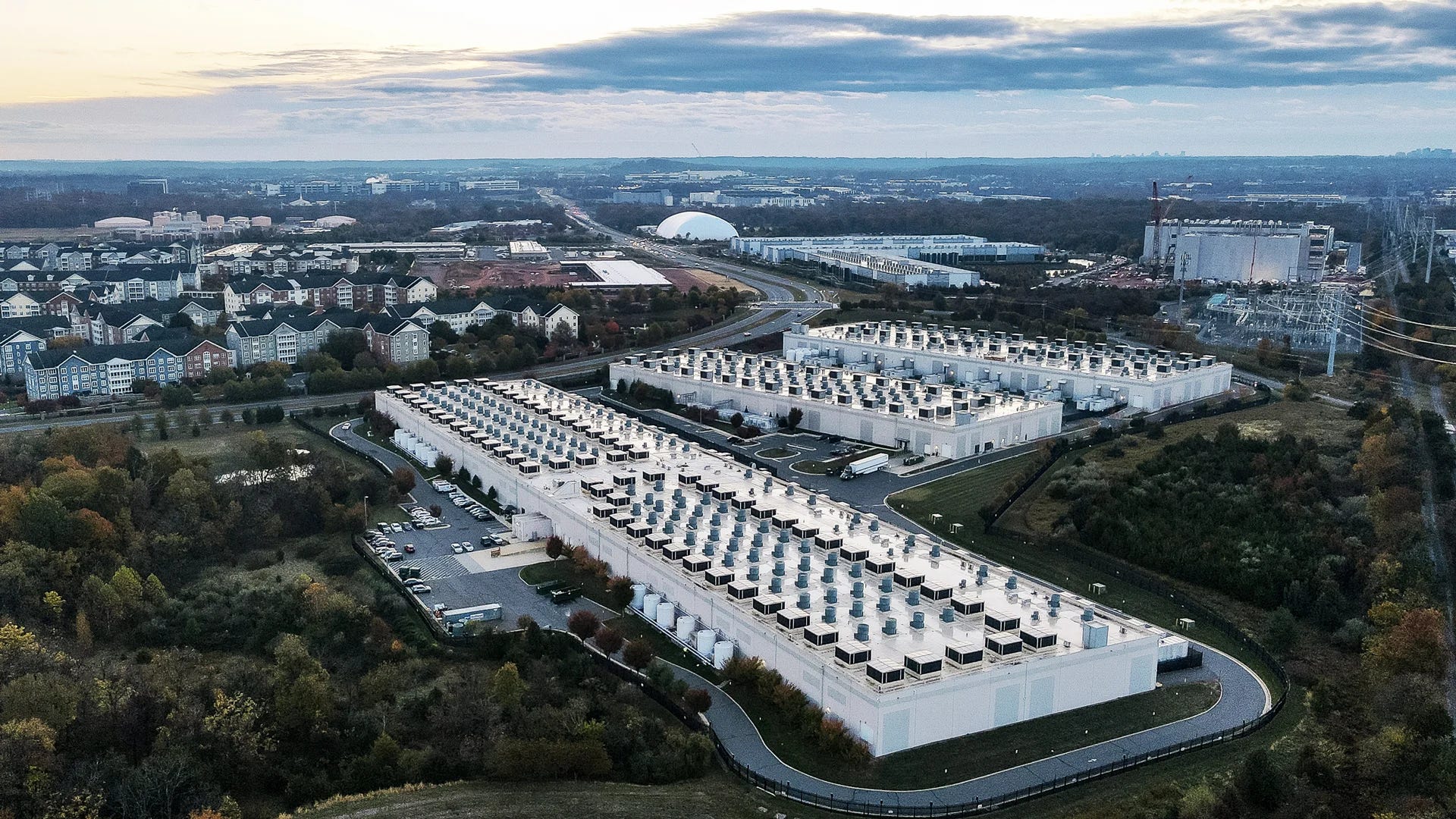
Data Center Alley, the physical home of the internet (and increasingly, of AI). Loudoun and Fairfax counties form the largest data center market in the world, with roughly 4,900 megawatts of commissioned capacity as of early 2025 and the densest fiber connectivity anywhere. Ashburn routes an enormous share of global internet traffic.
Corporate and capital anchors. Northern Virginia hosts one of the country’s highest concentrations of Fortune 500 headquarters, well over a dozen, including Boeing and RTX (both Arlington), General Dynamics, Leidos, and CACI (Reston), Northrop Grumman (Falls Church), Capital One, Freddie Mac, Hilton, and Booz Allen (McLean/Tysons), and Amazon’s HQ2 (Arlington), alongside the services giants Deloitte, SAIC, and others. That base means enterprise pilots, corporate venture arms, and an executive talent bench within a short drive.
Connectivity in every direction. Two major airports (Dulles and Reagan National), Metro’s Silver Line now running all the way to Dulles, and the interstate spine of I-95, I-495, and I-66 keep the region tied together internally and connected to the rest of the country.
How We Got Here
Northern Virginia’s startup DNA was forged by the federal government and the fiber that followed it. The early internet was quite literally built here, with ARPANET’s roots running through Arlington, and the Dulles Technology Corridor grew up in the 1990s and 2000s around companies like AOL, MicroStrategy, and later the low-code platform Appian, education company Blackboard, and events-software company Cvent. That generation established the pattern that still holds: deeply technical companies solving problems for government and large enterprise, often in security-adjacent categories.
The 2018 announcement that Amazon would put “HQ2” in Arlington’s National Landing (spanning parts of Arlington and Alexandria) was supposed to be the region’s coming-out party, a promise of 25,000 jobs and a futuristic campus anchored by a spiral tower called the Helix - though progress has been mixed. Phase 1, the Metropolitan Park campus, opened in June 2023 with two 22-story towers and now houses roughly 8,500 employees, with room for about 12,000. However, Phase 2 (featuring PenPlace and the Helix) has been paused since 2023.
Two forces have mattered more to the actual startup scene over the last five years. First, the data center history in the area and modern boom turned NoVA into the infrastructure capital of the internet. Second, the region leaned hard into defense technology and applied AI, as a new wave of founders, many of them veterans or ex-intelligence, built companies squarely aimed at national security.


Resources for Startups
Investors
In addition to a broad set of early-stage venture capital firms in the area, public capital and corporate venture capital play a significant role in the Northern Virginia ecosystem.
The prior Center for Innovation and Technology was restructured into the Virginia Innovation Partnership Corporation (VIPC), the nonprofit operating arm of the Virginia Innovation Partnership Authority. VIPC runs the GAP Funds, the Virginia Venture Partners co-investment vehicle, the Virginia Founders Fund for underrepresented founders, and commercialization programs like Lab-to-Launch with the state’s research universities.
Northern Virginia is also home to many Fortune 500 headquarters- which means that venture arms set up alongside those parent companies. RTX Ventures, Capital One Ventures, Booz Allen Ventures, and NextEra Energy Investments are all investing out of, or into, this region, alongside In-Q-Tel, which is effectively the intelligence community’s venture arm.
Corporate & strategic investors
In-Q-Tel (Arlington) — the intelligence community’s strategic investor, and the original model for mission-driven venture | National security tech | Strategic
RTX Ventures (Arlington) — the CVC arm of RTX, launched in 2022 | Aerospace, defense, dual-use | Seed to Series B
Booz Allen Ventures (McLean) — a $100M corporate venture arm; portfolio includes NOVA’s Corsha and Shift5 | Dual-use, cyber, AI | Strategic
Capital One Ventures (McLean) | Fintech, data, enterprise software | Growth
NextEra Energy Investments — energy and infrastructure capital, increasingly relevant as power becomes the binding constraint on AI | Energy, infrastructure | Strategic
Venture firms & studios
QED Investors (Alexandria) — one of the most prominent fintech VCs in the country, founded by Capital One co-founder Nigel Morris | Fintech, financial services | Seed to growth
Razor’s Edge Ventures (Reston) | National security, defense tech, cyber | Seed to growth
Motley Fool Ventures (Alexandria) — a $150M fund launched in 2018, built on The Motley Fool’s brand and member community | Fintech | Early stage
Red Cell Partners (McLean) — a venture studio that incubates and launches its own companies in healthcare, cyber, and national security | Incubation
FedTech (Arlington) — venture studio and accelerator pairing entrepreneurs with federal lab technology; alumni have raised more than $5.7B | Deep tech | Pre-seed, studio
Blu Venture Investors (Vienna) | Cybersecurity, healthcare, dual-use tech | Seed, Series A
Sands Capital Ventures (Arlington) | Life sciences, technology, consumer | Series A+
Columbia Capital (Alexandria) | Telecom, media, enterprise infrastructure | Agnostic
Blue Delta Capital Partners (McLean) | Federal government services | Growth
Route 66 Ventures (Alexandria) | Fintech, digital health | Seed
SineWave Ventures (Arlington) | Enterprise, bridging commercial and public sector | Seed, Series A
Lavrock Ventures (McLean) | Enterprise, data/analytics, cybersecurity | Seed to Series B
Outpost Ventures | National security, dual-use technology | Early stage
Incubators & Accelerators
Refraction (McLean) is a nonprofit innovation community that hosts startups and scaleups, runs programming and an apprenticeship pipeline with Northern Virginia Community College, and has drawn direct investment from Fairfax County to expand.
MACH37 (Tysons, operated by VentureScope) is one of the oldest cybersecurity-focused accelerators in the country, running a multi-month program for early cyber-product companies since 2013.
FedTech (Arlington) runs equity-free startup studios and accelerators that match entrepreneurs with technology out of federal labs, including the Homeland Security Startup Studio with DHS and programs with NASA, DOE, and Northrop Grumman.
Mason Enterprise at George Mason University operates a network of incubators and Small Business Development Centers across Northern Virginia, plus the ICAP commercialization program.
NSTXL (National Security Technology Accelerator) connects companies building dual-use and defense technologies to government acquisition pathways.
National Innovation Quarter (National IQ), announced in early 2026, is a new innovation district spanning Arlington and Alexandria, backed by Amazon, Virginia Tech, and Arlington Economic Development, that will host accelerators and investor summits.
Coworking
Arlington and Alexandria both offer a wide breadth of coworking spaces.
Arlington
Industrious — multiple locations including Ballston and Rosslyn
Carr Workplaces — Clarendon and other locations
Venture X — Courthouse Metro
Life Time Work — Ballston, coworking attached to the gym
TKO Suites — Arlington
Three Whistles — an independent favorite
Virtus Innovation Hub — opened in National Landing in spring 2026, aimed specifically at startups and investors
WeWork — 1201 Wilson Blvd, Rosslyn
Alexandria
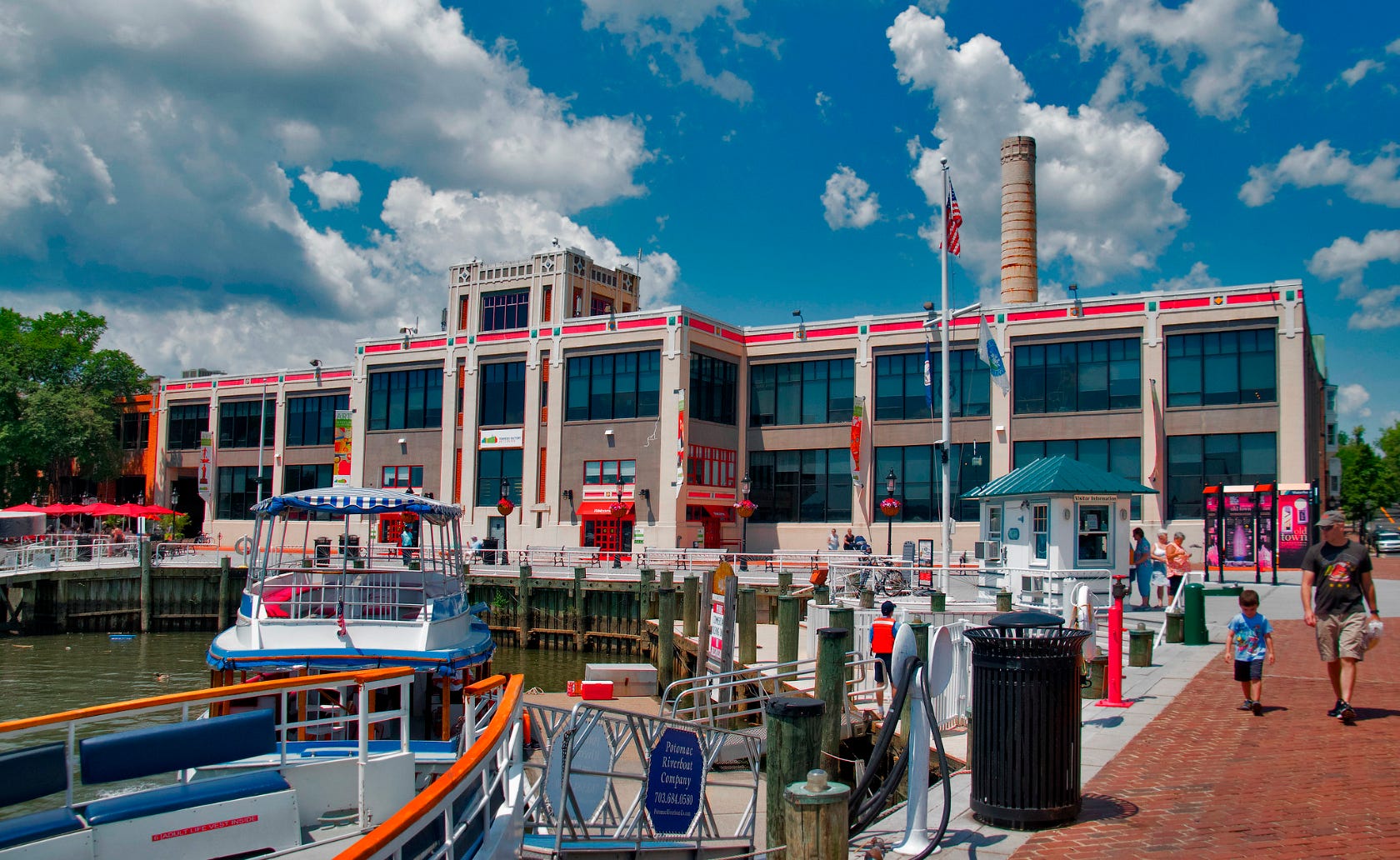
ALX Community — the homegrown, dog-friendly anchor, with four Old Town locations (Founders Hall, the Atrium, the Waterfront, and 101 N. Union)
Saltbox — Eisenhower Avenue, geared toward companies with physical products and logistics needs
The Link — independent, wellness- and community-oriented space with on-site coffee
Carr Workplaces and Regus — several locations
Reston/Tysons
Refraction (McLean) — the community hub above, with space as well as programming
Community Organizations
NVTC (Northern Virginia Technology Council) remains the region’s flagship tech membership organization, with roughly 500 member companies employing hundreds of thousands of people. Its events and awards programs (Tech100, the Cyber Summit and Cyber50, the Data Center Awards) are fixtures on the regional calendar.
EO (Entrepreneurs’ Organization) maintains an active peer network for founders and business owners in the region.
Local economic-development groups, Arlington Economic Development, the Fairfax County EDA, and Loudoun Economic Development, are extremely active as ecosystem builders, not just site-selection offices.
Talent Pipeline
George Mason University is Virginia’s largest public research university and a significant engine for tech and entrepreneurial talent, anchoring much of the Mason Enterprise programming above. Its new Fuse at Mason Square tech hub in Arlington is a fresh anchor for research and startup activity.
Virginia Tech’s Innovation Campus in Alexandria’s Potomac Yard opened its first academic building in early 2025, an 11-story, 300,000-square-foot facility for graduate computer science and engineering.
Northern Virginia Community College (NOVA), Marymount University, and nearby institutions round out a deep and accessible pipeline.
Notable Annual Events
DMV Deep Tech Week is a newer region-wide series connecting founders, investors, and public-sector leaders across emerging technologies, with Arlington hosting kickoff activities at JBG Smith’s Concorde Conference Center in National Landing.
Accelerate Investor Conference (George Mason University’s Arlington campus, each fall) convenes early-to-mid-stage DMV startups, students, and investors for pitch competitions and programming, organized through Mason Enterprise with VIPC and regional EDAs.
NVTC’s signature events, the Tech100 celebration, the Cyber Summit and Cyber50 awards, and the Data Center Awards, are among the best-attended gatherings of the regional tech community.
Ecosystem-wide programming from Refraction, National IQ, and the county EDAs fills out a steady cadence of pitch nights, demo days, and founder meetups.
Startups to Watch
We’ve retired the 2021 list of startups to watch (see “Since 2021” below for what happened to those companies) and focused on companies that reflect where the region is actually building in 2026: AI infrastructure, defense tech, cybersecurity, space, and applied AI in logistics. Funding figures below are point-in-time.
AI & Data Infrastructure
Emerald AI (Clarendon/Arlington) — Software that lets data centers flex and reduce their power draw during peak grid demand, directly addressing the energy bottleneck now strangling NOVA’s own data center growth. Launched in July 2025 with $24.5M in seed funding and Nvidia backing; founder and CEO Varun Sivaram. Since named a 2026 World Economic Forum Technology Pioneer.
Trase (McLean) — An agentic operating system and AI agent suite built for high-stakes, heavily regulated environments where compliance and governance are non-negotiable. In June 2026 it raised a $107M seed round led by ARCH Venture Partners, with Red Cell Partners and Virginia Venture Partners participating, bringing total funding to $117.5M.
Seekr Technologies (Reston) — A trustworthy-AI platform building tools to evaluate and ground large language models for high-stakes government and enterprise use.
Rune Technologies (Rosslyn/Arlington) — AI-driven military logistics software (its TyrOS platform), closing a $24M Series A in August 2025. A clean example of the defense-tech-plus-AI wave.
Cybersecurity & Defense Tech
Cape (Arlington) — A privacy-focused mobile carrier that minimizes the personal data collected on its network. Raised a $100M Series C at roughly a $900M valuation in early 2026, led by Bain Capital Ventures and IVP.
Quartermaster (Arlington) — Maritime intelligence. Its “SmartMast” system equips ships with sensors and AI analytics to build real-time visibility across global waterways. Raised a $43M Series A in May 2026.
Rilian (McLean) — An AI-native cybersecurity and defense systems integrator. Its Caspian platform is an agentic security orchestration layer that automates cyber and defense tooling across sovereign cloud, on-prem, and air-gapped environments. Raised $17.5M in seed and seed extension funding in April 2026.
Shift5 (Arlington) — Operational-technology cybersecurity for military and commercial transportation systems (planes, trains, tanks). One of the region’s more prominent venture-backed defense-tech companies.
Corsha (Vienna) — Machine-identity and API security, with backing from Booz Allen Ventures.
Kovr.ai (Reston) — AI for cyber compliance and authorization paperwork (ATOs), launched in 2025 with $3.6M. A very NOVA problem to solve.
Space & Geospatial
Scout Space (Reston) — Space domain awareness. Scout builds sensors that fly aboard customer satellites, from cubesats to GEO birds, and turns that data into services for rendezvous, proximity operations, and collision avoidance. Closed an $18M Series A in May 2026.
Applied AI & Logistics
GenLogs (Arlington) — Freight intelligence built on roadside sensors, satellite data, and analytics to track truck movements nationwide, fight cargo fraud, and improve highway safety. Closed a $60M Series B in early 2026.
CLEATUS (Arlington) — An AI platform that automates government contracting workflows so small businesses can find, manage, and win federal contracts. Raised $4M in seed funding in 2026. A textbook example of a company that could really only start here.
Scaling
Interos (Arlington) — AI-powered supply-chain and business-ecosystem risk monitoring, and Arlington’s first startup unicorn (2021). Still one of the region’s marquee growth-stage names.
MarginEdge (Arlington) — Restaurant management and bill-payment software, now a large platform that’s still expanding via partnerships and acquisitions. A genuine homegrown scale-up.
HUNGRY (Arlington) — The chef-driven catering marketplace from the original guide is still independent and scaling, with a 2025 partnership with Sodexo and roughly $77M raised to date. Not a fresh name, but a genuine local success-in-progress worth keeping on the radar.
Since 2021: Exits & Milestones
Part of the reason to retire the old list is that the region has actually produced outcomes. And 2026 has been one of the biggest years yet for the region, headlined by two major deals in the exciting space industry.
Rocket Lab is acquiring Iridium Communications (McLean) in a roughly $8 billion deal. Announced in June 2026, Rocket Lab (Nasdaq: RKLB) will acquire Iridium for $54 per share in cash and stock, an enterprise value of about $8.0 billion, in one of the most consequential transactions in the commercial space industry. The combined company would be fully vertically integrated, designing, building, launching, and operating its own constellations.
HawkEye 360 (Herndon) went public. The radio-frequency signals intelligence company priced its IPO at $26 per share on May 6, 2026, selling 16 million shares to raise $416 million at roughly a $2.4 billion valuation. HawkEye 360 operates a constellation of more than 30 satellites that detect and geolocate RF emissions, selling to U.S. defense and intelligence agencies and allied governments. It had raised over $580M privately from backers including Reston’s own Razor’s Edge Ventures, GIC, and Insight Partners.

Other earlier outcomes worth remembering:
Neustar (Reston) — TransUnion acquired its marketing, fraud, and communications business for $3.1 billion in 2021.
Clarabridge (Reston) — Qualtrics acquired the customer-experience analytics company for roughly $1.1 billion in 2021.
Cvent (Tysons) — Went public again via SPAC in December 2021, then was taken private by Blackstone in a $4.6 billion deal in 2023.
Interos (Arlington) — Reached unicorn status in 2021 on a $100M round, the first private Arlington company to do so.
Rize Money (Arlington) — The embedded-payments fintech from our 2021 list was acquired by Fifth Third in 2023.
Upskill (Vienna/Tysons) — The AR company that led our 2021 list was acquired by TeamViewer in March 2021, essentially the week the original guide went out.
Tech Media & Where to Follow the Scene
Build In SE — our own coverage of startup ecosystems across the Southeast, including guides like this one
Technical.ly (DC) — the most consistent day-to-day coverage of DMV startup funding and news
Virginia Business and its annual StartVirginia issue — the best statewide startup lens
DC Inno (via the Washington Business Journal) — regional innovation coverage
ARLnow and its sister sites ALXnow and FFXnow — great sources on local company news, and often first to report Arlington raises
Axios — worth knowing that Axios is headquartered in Arlington, VA. It covers national news rather than the local startup beat, but it’s a genuine Arlington-born media success story, it spun out Axios HQ as its own software company, and its events (including Axios AI+DC) regularly convene the region’s tech and defense crowd.
Hypepotamus — broader Southeast startup coverage, useful for regional context
Startup Jobs & Public Initiatives
Work in Northern Virginia (Fairfax County EDA) — a centralized hub for NOVA jobs, resources, and training
Arlington Economic Development and the county EDAs — job boards, incentives, and founder resources
Virginia Economic Development Partnership (VEDP) — relocation, expansion, and incentive resources at the state level
VIPC — the state’s front door for early-stage grants and investment (see Investors, above)
Wellfound (formerly AngelList Talent) — the startup job platform that replaced the old AngelList; the location-specific AngelList links in the 2021 guide are dead and have been dropped.
What’s Next for Northern Virginia
Northern Virginia is in the middle of a genuine identity shift. For decades the story was government contracting, a stable, unglamorous engine that quietly made the region one of the wealthiest and most educated in the country. That engine is now being retooled in real time: defense tech and applied AI are pulling a new generation of ambitious founders into national-security problems, and Data Center Alley has made the region indispensable to the AI buildout even as it fights over the land and power that boom requires.
It’s not all tailwinds, though. HQ2’s second phase is on ice, federal spending cuts have introduced real uncertainty into the contractor base that so much of the local economy rests on, and the data center backlash is reshaping what gets approved and where.
But the fundamentals that made this a great place to start a company haven’t gone anywhere: proximity to some of the largest customers in the world, one of the deepest technical and cleared talent pools in the country, real institutional capital from VIPC to In-Q-Tel to a dense bench of corporate venture arms, and a physical concentration of internet and AI infrastructure that exists nowhere else. If you’re building in defense, cyber, govtech, AI, or the infrastructure underneath all of it, there may be no better address in the country.
If you’re a founder, investor, or operator building in Northern Virginia, or thinking about it, I’d genuinely like to hear from you. Reach out any time at ryan@buildinse.com, and if you know of a company, fund, or organization that belongs in this guide, send it my way.